Subscription Box Packaging Design Guide in 2026
Subscription boxes have become a popular way for brands to deliver curated products directly to customers. From beauty and skincare to wellness, specialty foods, lifestyle products, and promotional kits, subscription services offer opportunities to build ongoing relationships through recurring deliveries.
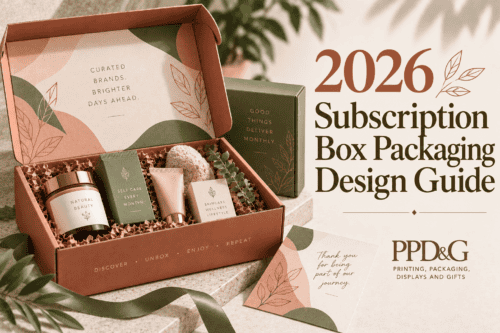
However, successful subscription box packaging requires more than an attractive exterior. The box must protect its contents, accommodate different product combinations, support efficient shipping, and create an unboxing experience that customers look forward to receiving.
In 2026, brands are focusing on custom subscription box packaging that balances structural design, branding, sustainability, and functionality. Whether you’re launching a new subscription service or updating an existing packaging program, the following design considerations can help you create packaging that supports both your products and your customer experience.
At PPD&G, we provide custom packaging solutions designed around your products, branding, and distribution requirements. Contact us or request a quote to get started!
1. Choose the Right Subscription Box Structure
The first step in designing subscription box packaging is selecting a structure that fits your products and distribution requirements.
Because subscription boxes are typically shipped directly to customers, they need to withstand transportation while maintaining an appealing presentation.
Common subscription box styles include:
- Corrugated Mailer Boxes: A popular choice for subscription services because they provide structural support, customizable printing surfaces, and convenient opening mechanisms.
- Tuck-Top Boxes: These boxes offer a clean presentation and can work well for lightweight products or subscription kits.
- Rigid Boxes: A premium option for luxury subscription programs, specialty gift boxes, and high-value products.
- Custom Die-Cut Boxes: Designed around specific product dimensions, opening styles, and presentation requirements.
- Two-Piece Boxes: Featuring a separate lid and base, these structures can create a more traditional gift-style unboxing experience.
The best structure depends on the size, weight, fragility, and number of products included in each shipment.
2. Design Around Your Products
Subscription boxes often contain several products with different shapes, sizes, and weights.
A beauty subscription, for example, might include glass serum bottles, skincare jars, sample packets, and cosmetic accessories. A wellness box could contain candles, supplements, personal care products, and promotional materials.
Designing the package around these products can help minimize unnecessary space and reduce movement during shipping.
Before developing your box, consider:
- Average number of products per shipment
- Product dimensions and weight
- Fragile or breakable components
- Variations between monthly shipments
- Space needed for promotional materials
- Packaging assembly requirements
- Shipping and fulfillment considerations
For subscriptions with frequently changing product assortments, a flexible packaging structure may be more practical than one designed around a single product configuration.
3. Create a Memorable Unboxing Experience
One of the biggest advantages of subscription packaging is the opportunity to create an experience customers encounter repeatedly.
Unlike a traditional retail purchase, subscription boxes arrive directly at the customer’s home, making the package itself an important brand touchpoint.
Thoughtful design can make opening each delivery feel like an event.
Brands can enhance the unboxing experience through custom interior printing, branded tissue paper, organized product placement, personalized messaging, and carefully selected packaging materials.
The opening sequence also matters. A printed message inside the lid, for example, can introduce the month’s theme before the customer sees the products.
The goal is to create a memorable experience without making the package unnecessarily complicated.
4. Use Custom Inserts for Product Protection and Presentation
Custom inserts can serve two important purposes: protecting products during transportation and creating an organized presentation.
Without proper support, products may shift or collide during shipping, particularly when a subscription contains multiple items.
Depending on the application, brands may consider:
- Die-cut paperboard inserts
- Corrugated dividers
- Foam inserts
- Molded fiber components
- Custom product trays
- Multi-compartment structures
Inserts can also help establish a visual hierarchy within the box.
For example, a featured product might occupy the most prominent position, while smaller items are arranged around it.
For subscription services with changing assortments, removable or adjustable insert configurations may provide additional flexibility.
5. Incorporate Branding Inside and Outside the Box
Subscription box packaging should feel like an extension of the brand.
The exterior is often the customer’s first interaction with each shipment, while the interior provides another opportunity to reinforce brand identity.
Custom printing can incorporate logos, brand colors, typography, patterns, illustrations, and campaign-specific messaging.
In 2026, subscription brands are using both minimalist and bold design approaches, depending on their target audience.
A luxury skincare subscription might feature muted colors, refined typography, and subtle decorative finishes. A lifestyle subscription targeting younger audiences may benefit from expressive graphics, bright colors, and playful messaging.
Consistency is particularly important for recurring shipments. Even when the products change each month, recognizable packaging can help maintain a cohesive brand experience.
6. Consider Sustainable Subscription Box Packaging
Because subscription boxes are delivered repeatedly, material efficiency is an important design consideration.
Brands are increasingly evaluating ways to reduce unnecessary packaging while maintaining the protection and presentation customers expect.
Potential strategies include:
- Using right-sized boxes
- Incorporating recycled-content materials
- Selecting recyclable packaging components where appropriate
- Reducing excessive void fill
- Exploring paper-based inserts
- Minimizing unnecessary layers
- Designing packaging with reuse in mind
Corrugated and paperboard materials can be useful options for many subscription applications, although recyclability depends on the finished packaging construction and local recycling capabilities.
Sustainable packaging decisions should also consider product protection. A package that fails during shipping can create additional waste through damaged products, returns, and replacements.
7. Optimize Packaging for Shipping Efficiency
Shipping costs can significantly influence the economics of a subscription box program.
Because shipments occur on a recurring basis, even small differences in package dimensions, weight, or assembly requirements can affect overall fulfillment expenses.
Custom packaging allows brands to design around realistic product dimensions rather than relying on oversized standard boxes.
Right-sizing can help reduce unnecessary void fill and may improve storage, packing, and transportation efficiency.
Brands should also consider how packaging dimensions affect carrier pricing, particularly when dimensional weight is used to calculate shipping charges.
The ideal package should provide sufficient protection while avoiding unnecessary volume.
8. Make Subscription Boxes Easy to Assemble
Packaging design affects more than the customer experience. It also influences fulfillment operations.
Subscription programs may involve packing hundreds or thousands of boxes within a relatively short shipping window.
A complicated structure that requires extensive manual assembly can increase labor requirements and slow fulfillment.
When developing custom subscription packaging, consider how quickly boxes can be assembled, filled, closed, labeled, and prepared for shipment.
Features such as efficient folding structures, straightforward closure mechanisms, and easy-to-position inserts can help streamline packing operations.
For larger subscription programs, these practical considerations can be just as important as the appearance of the finished box.
9. Explore Personalized and Seasonal Packaging
Subscription services provide recurring opportunities to introduce new products, themes, and promotional campaigns.
Brands can use packaging to reinforce seasonal collections, limited-edition releases, product launches, and special subscriber experiences.
For example, a beauty subscription might introduce a holiday-themed box, while a wellness brand could develop packaging around seasonal routines.
Personalized inserts, printed messages, and promotional cards can also make the experience feel more relevant to individual customers.
However, brands should balance customization with production efficiency.
Maintaining a consistent box structure while updating printed components or interior messaging may provide flexibility without requiring a completely new packaging design for every shipment.
10. Design Subscription Packaging That Encourages Customer Retention
Subscription businesses depend on customers continuing their memberships over time.
While packaging alone cannot guarantee customer retention, it can contribute to the overall experience customers associate with the subscription.
A well-designed box helps communicate product quality, reinforce brand recognition, and make each delivery feel intentional.
Interior messaging can introduce featured products, provide usage instructions, or direct customers to additional content.
QR codes may also connect subscribers to tutorials, product information, exclusive offers, or other digital experiences.
The packaging should support the relationship between the brand and the subscriber rather than functioning solely as a shipping container.
What Should Brands Consider When Designing Subscription Boxes?
There is no single packaging structure that works for every subscription service.
The best solution depends on the products, shipping frequency, target audience, fulfillment process, and desired presentation.
Before developing custom subscription box packaging, brands should consider:
- Product dimensions and weight
- Number of items per shipment
- Variations in product assortments
- Fragile product requirements
- Exterior box strength
- Custom insert needs
- Printing and branding opportunities
- Desired unboxing experience
- Sustainability objectives
- Shipping dimensions and costs
- Assembly and fulfillment efficiency
- Production quantities and timelines
- Budget and long-term packaging needs
Addressing these factors early can help create a packaging program that supports both the customer experience and ongoing operations.
Custom Subscription Box Packaging Starts With Good Design
A successful subscription box should do more than deliver products. It should protect the contents, reinforce your brand, support efficient fulfillment, and create an experience customers look forward to receiving.
At PPD&G, we provide custom packaging solutions designed around your products, branding, and distribution requirements. From custom boxes and specialty packaging to protective inserts, printed interiors, and presentation packaging, our team can help turn your subscription packaging concept into a finished product.
Whether you’re launching a new subscription service, redesigning an existing box, or developing packaging for a seasonal subscription program, thoughtful design can help create a cohesive experience from the first shipment onward.
Planning a custom subscription box packaging project for 2026? Contact PPD&G to discuss your products, packaging requirements, and design goals.