Shipping and displaying fragile products requires more than selecting a box that fits. Glassware, cosmetics, electronics, luxury goods, specialty products, and other delicate items can be vulnerable to impacts, vibration, compression, and movement throughout shipping and handling.
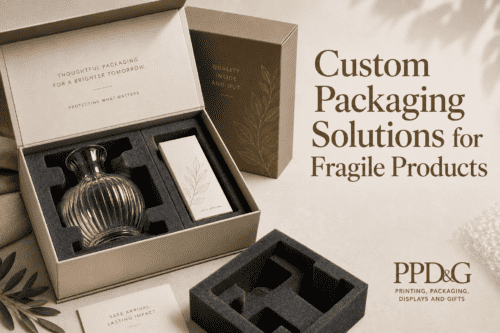
Custom packaging allows brands to design the entire package around the product rather than trying to make a standard box work. From engineered inserts and protective materials to rigid boxes and custom dimensions, the right packaging solution can help protect fragile products while maintaining the presentation customers expect.
Here are some of the most important considerations when developing custom packaging for fragile products.
1. Start With Packaging Designed Around the Product
Effective protective packaging begins with the product itself.
Its dimensions, weight, shape, materials, and vulnerable areas should all influence the packaging design. A glass fragrance bottle, for example, has very different protection requirements than an electronic device or a collection of ceramic products.
Custom-sized packaging can reduce unnecessary empty space and limit product movement inside the box. It also allows designers to provide additional protection around particularly vulnerable areas such as corners, necks, edges, lids, or glass surfaces.
Instead of adding protective materials to a generic box after the fact, the protection becomes part of the package’s structural design.
2. Use Custom Inserts to Keep Products Secure
Custom inserts are one of the most effective tools for protecting fragile products.
An insert can be designed around the exact dimensions and shape of a product, creating a designated position that helps prevent movement during transportation.
Depending on the product and application, insert materials and configurations may include:
- Foam inserts
- Paperboard inserts
- Corrugated inserts and partitions
- Molded fiber components
- Die-cut structures
- Multi-level product trays
- Custom dividers
For packaging containing several products, inserts can also prevent individual components from colliding with one another.
The appropriate solution depends on the product’s weight, fragility, presentation requirements, shipping environment, and desired customer experience.
3. Consider Foam Packaging for Delicate Products
For certain highly fragile or valuable products, custom foam can provide additional cushioning and support.
Foam inserts can be cut or formed to closely follow the shape of the product. This can help absorb impacts while keeping the item securely positioned within the package.
Custom foam may be particularly useful for products such as glass components, electronics, instruments, specialty equipment, presentation samples, and high-value promotional items.
It can also contribute to the presentation of premium products by creating a clean, organized interior where every component has a specific location.
4. Choose the Right Box Structure
The outer packaging structure is just as important as the materials inside.
Rigid setup boxes can provide a sturdy, premium structure for high-value or presentation-focused products. Corrugated packaging may be appropriate when additional shipping durability is required, while folding cartons can work for lighter products when paired with an appropriately designed insert.
Some applications may benefit from multiple layers of packaging.
For example, a fragile product could be secured within a custom presentation box that is then placed inside a separate corrugated shipping container. This allows the interior package to focus on branding and presentation while the outer packaging handles many of the demands associated with distribution.
5. Protect Multiple Products Within One Package
Gift sets, product collections, PR kits, sample packages, and promotional boxes often contain several fragile items in a single package.
Without proper separation, these products can move or strike one another during transit.
Custom partitions and inserts can create individual compartments for each component. Designers can also account for differences in product size, weight, and shape when determining how items should be positioned.
Product placement matters as well. Heavier components may require additional structural support, while especially delicate products may need greater clearance from the exterior walls of the package.
A carefully engineered interior can provide both protection and an organized presentation.
6. Balance Protection With Presentation
Protective packaging doesn’t have to look purely functional.
For luxury goods, cosmetics, fragrances, premium foods, gifts, electronics, and promotional products, the packaging is often part of the customer’s first impression of the brand.
Custom packaging allows protective elements to be incorporated into the overall design rather than appearing as an afterthought.
A precision-cut insert, for example, can secure a fragile product while also positioning it for an attractive reveal when the box is opened. Interior printing, custom wraps, specialty papers, embossing, debossing, foil stamping, and other finishing options can further reinforce the brand experience.
The goal is to create packaging that protects the product and presents it effectively.
7. Design for the Entire Shipping Journey
A package that looks secure on a tabletop may experience very different conditions during distribution.
Products can encounter repeated handling, vibration, stacking, drops, temperature changes, and movement throughout warehousing and transportation.
When developing packaging for fragile products, brands should consider the entire journey from packing through final delivery.
Questions to consider include:
- Will products ship individually or in larger cases?
- Is the package intended for retail distribution or direct-to-consumer shipping?
- How heavy is the finished package?
- Could the product move inside its insert?
- Which areas of the product are most vulnerable to impact?
- Will packages be stacked during storage or transportation?
- Does the retail or presentation box require an additional shipping container?
Understanding these requirements early can help inform the appropriate combination of structure, materials, inserts, and secondary packaging.
8. Don’t Overlook the Unboxing Experience
Protection is the priority with fragile products, but customers shouldn’t have to fight through excessive packaging to reach what they purchased.
Well-designed packaging can make protective components feel intentional.
Products can be positioned so they’re immediately visible when the package opens, while inserts can be designed for easy removal. Instructions or printed messaging can also be incorporated when a product requires special handling.
For premium products in particular, the moment the box opens should reinforce the quality of what’s inside.
9. Reduce Damage Without Excessive Packaging
Adding more packaging material isn’t always the best way to increase protection.
Oversized boxes filled with excessive cushioning can increase material use, package dimensions, and shipping volume without necessarily providing the most effective protection.
Custom packaging offers an opportunity to use materials more strategically.
A precisely designed insert, right-sized box, and appropriate outer shipping container can provide targeted protection where it’s needed most.
This approach can help brands balance product protection with material efficiency, shipping requirements, and sustainability objectives.
What Should You Consider When Packaging Fragile Products?
Every fragile product presents different packaging challenges. Before selecting a packaging structure, consider:
- Product dimensions and weight
- Fragile or vulnerable areas
- Number of products within each package
- Appropriate cushioning requirements
- Insert or divider design
- Exterior box strength
- Retail versus e-commerce distribution
- Shipping and handling conditions
- Presentation and branding requirements
- Ease of unpacking
- Sustainability objectives
- Production quantities and budget
Working through these factors early in the design process can help determine which packaging materials and structures are appropriate for the application.
Custom Packaging for Fragile Products Starts With Good Design
Protecting fragile products requires more than adding cushioning to a standard box. The package should be designed around the product, considering its dimensions, weight, vulnerable areas, shipping environment, presentation requirements, and customer experience.
At PPD&G, we provide custom packaging solutions designed around your specific products and packaging requirements. From custom rigid boxes and protective inserts to retail packaging, presentation boxes, and specialty packaging solutions, our team can help develop packaging that combines product protection with professional presentation.
Have a fragile product that requires custom packaging? Contact PPD&G to discuss your product, packaging requirements, and custom packaging project.